Hauz Khas Complex is one of South Delhi‘s most atmospheric heritage sites. A medieval reservoir, a Tughlaq-era madrasa, ancient tombs and a leafy deer park sit beside one of the city’s trendiest neighbourhoods. History lovers come for the architecture. Photographers come for the lake and golden-hour light. Everyone else comes for the cafés and nightlife of Hauz Khas Village.
The name comes from Persian and Urdu: Hauz means “water tank” and Khas means “royal”. It refers to the large tank built to supply water to the nearby settlement of Siri.
Hauz Khas Complex Overview
| Detail | Information |
|---|---|
| Location | Hauz Khas, South Delhi |
| Built by | Alauddin Khilji (reservoir), Firoz Shah Tughlaq (madrasa and tomb) |
| Period | 13th–14th century |
| Known for | Lake, madrasa, Firoz Shah’s tomb, Deer Park, Hauz Khas Village |
| Entry | Generally free for the monument area (check locally) |
| Timings | Roughly sunrise to sunset |
| Nearest metro | Hauz Khas (Yellow and Magenta Lines) |
| Time needed | 2–3 hours |
Timings and entry rules can change, so confirm locally before you go.
Location and Address
The complex lies in South Delhi, close to IIT Delhi and Aurobindo Marg.
Address: Hauz Khas Village, Hauz Khas, New Delhi, Delhi 110016
Connectivity: How to Reach
- By metro: Hauz Khas station on the Yellow and Magenta Lines is the easiest option. Take an auto-rickshaw or walk for about 15 minutes to the village. Green Park station is another good choice.
- By road: The site is well connected via Aurobindo Marg and the Outer Ring Road. Cabs and autos are easy to find, but parking in the village gets tight on weekends.
- By air: Indira Gandhi International Airport is roughly 13–15 km away.
- By rail: New Delhi Railway Station is about 12–15 km away, depending on traffic.
Nearby Areas and Attractions
Hauz Khas sits among some of South Delhi’s best-known spots:
- Green Park and Safdarjung Enclave
- Deer Park, right next to the complex
- Safdarjung Tomb and Lodhi Garden
- IIT Delhi and the Qutub Minar area
- Saket’s malls and Select Citywalk
What Is Inside Hauz Khas Complex?
Hauz Khas Lake: Alauddin Khilji had the reservoir built in the early 14th century. Firoz Shah Tughlaq later restored it after it silted up. Walking paths around the water make it a favourite for photography and quiet mornings.
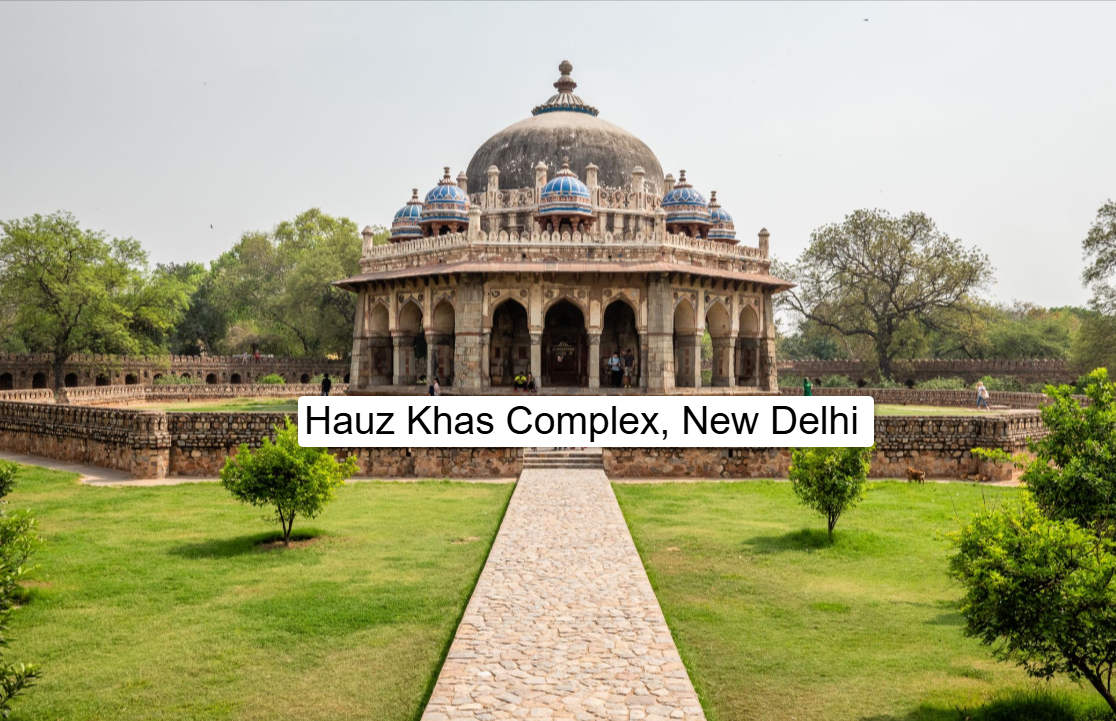
Madrasa: Firoz Shah Tughlaq built an Islamic college here in the mid-14th century. Its L-shaped, double-storeyed ruins overlook the lake and have domed pavilions, arched corridors and carved stonework.
Tomb of Firoz Shah Tughlaq: The ruler is buried within the complex, and the tomb is one of the key monuments. Several smaller domed tombs belonging to scholars and nobles stand nearby.
Deer Park: A green space adjoining the complex with walking trails, deer, peacocks and rabbits. It is ideal for a relaxed stroll.
Hauz Khas Village: A maze of lanes with boutiques, art galleries, rooftop cafés, bars and restaurants, many with views of the lake and ruins.
Why Is Hauz Khas Complex Famous?
Hauz Khas is famous because it blends layers of Delhi’s past with its modern culture. Few places let you stand in a 14th-century madrasa, look across a medieval lake and then walk a few minutes to a stylish rooftop café. The setting is popular for pre-wedding shoots, film locations, and evening hangouts. The village is also known for its design studios and independent fashion stores.
Things to Do in Hauz Khas
- Explore the madrasa and Firoz Shah’s tomb
- Walk around the lake, especially at sunset
- Spend time in Deer Park
- Photograph the domed ruins reflected in the water
- Browse boutiques and art galleries in the village
- Dine at a rooftop café with a lake view
- Enjoy live music and nightlife in the evening
- Cycle or jog in the park in the morning
Best Time to Visit
October to March is the best season. Delhi’s weather is cool and pleasant, which is perfect for walking around the ruins. Summers (April to June) are very hot, and the monsoon (July to September) can make paths slippery, though the greenery looks lovely.
For the best experience, visit in the early morning for quiet and soft light, or in the late afternoon to catch the sunset and stay on for dinner in the village.
Visitor Tips
- Wear comfortable walking shoes, as there are uneven stones and steps.
- Carry water and sun protection if you visit in the daytime.
- Visit on a weekday to avoid crowds, since weekends and evenings get busy.
- Use the metro when possible, since parking in the village is limited.
- Respect the monuments by not climbing on ruins or defacing walls.
- Keep your belongings secure in crowded lanes.
- Check the lighting before shooting; golden hour gives the best photos.
- Combine the visit with Deer Park and a meal in the village for a full half-day plan.
FAQ
Is Hauz Khas Complex worth visiting?
Yes. It offers history, scenery, food and nightlife in one place, which suits families, couples, solo travellers and photographers.
Is there an entry fee?
The monument area has generally been free to enter, but confirm current rules locally.
How much time should I plan?
Two to three hours for the monuments and lake, or half a day if you add the park and a meal.
Which metro station is closest?
Hauz Khas on the Yellow and Magenta Lines.
Is Hauz Khas safe in the evening?
It is generally lively and busy, but as in any city, stay aware of your surroundings and keep your valuables close.
Is it good for photography?
Very. The domed tombs, the lake reflections and the sunset light make it one of Delhi’s best photo spots.
Can I visit with kids?
Yes. The park and open spaces suit families, though the village’s evening bars are better for adults.