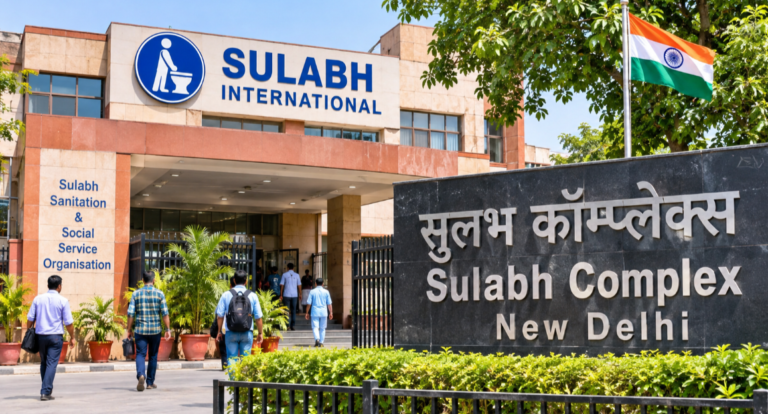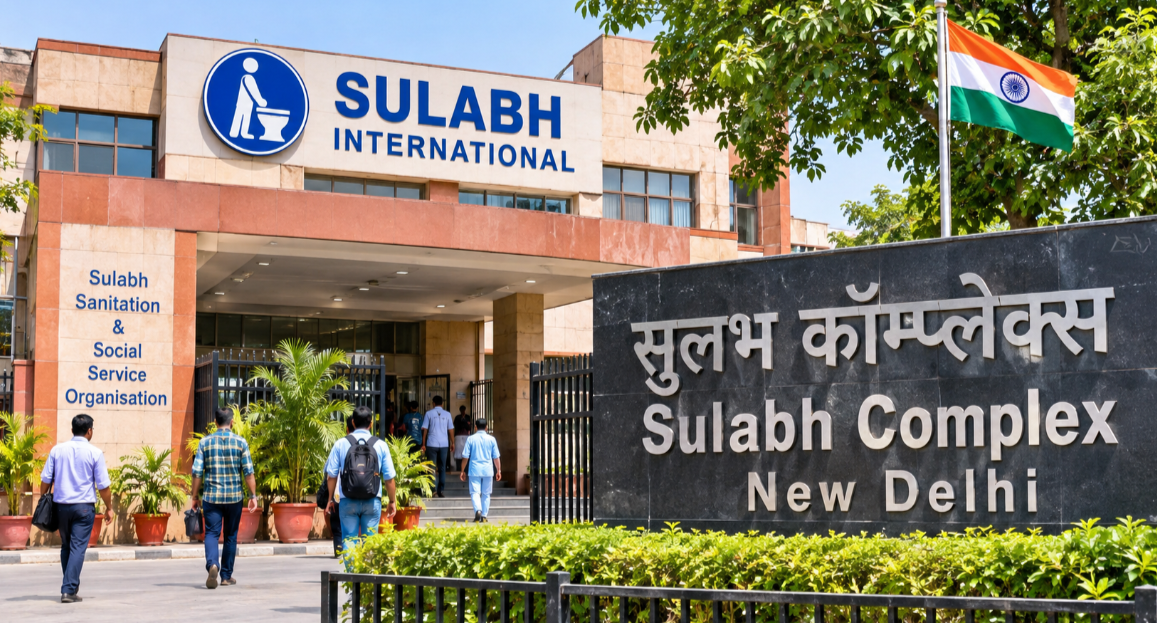
Sulabh Complex in New Delhi is the headquarters of Sulabh International, one of India’s best-known social service organisations working on sanitation, hygiene and social reform. It lies in the Mahavir Enclave area of West Delhi and is best known for the Sulabh International Museum of Toilets, an unusual museum that traces the history of sanitation across civilisations.
The word “Sulabh Complex” is also commonly used across India for the public toilet and bathing facilities that the organisation built and manages. This guide focuses on the headquarters campus and museum, which is the version most visitors search for.
Sulabh Complex Overview
| Detail | Information |
|---|---|
| Location | Mahavir Enclave, Palam Dabri Road, New Delhi |
| Type | NGO headquarters and museum |
| Founded by | Dr. Bindeshwar Pathak (Sulabh International, 1970) |
| Known for | Museum of Toilets, sanitation reform, low-cost toilet technology |
| Nearest metro | Dabri Mor–Janakpuri South (Magenta Line) |
| Nearest airport | Indira Gandhi International Airport (roughly 8–10 km) |
| Typical visit time | 1–2 hours |
| Entry | Usually free for the museum (confirm locally) |
Timings, entry rules and access can change, so please verify before you visit.
History
Sulabh International was founded in 1970 by Dr. Bindeshwar Pathak, a sociologist and social reformer from Bihar. At a time when manual scavenging and open defecation were widespread in India, he developed the Sulabh Shauchalaya, a low-cost, twin-pit, pour-flush toilet that could be built with local materials and maintained safely.
The model spread across towns and villages and led to thousands of public toilet complexes, along with efforts to rehabilitate people who had worked as manual scavengers. The Museum of Toilets opened in the 1990s on the Delhi campus to show how sanitation has evolved from ancient times to the present. Dr. Pathak’s work received national and international recognition, including the Padma Bhushan. He passed away in August 2023, and the organisation continues its work today.
Location and Address
The complex is in the Mahavir Enclave neighbourhood of West Delhi, close to Dabri and Palam, and not far from Dwarka and Janakpuri.
Address: Sulabh Bhawan, Mahavir Enclave, Palam Dabri Marg, New Delhi, Delhi 110045
Connectivity: How to Reach
- By metro: Dabri Mor–Janakpuri South on the Magenta Line is the most convenient. Take an auto or e-rickshaw for the short remaining distance. Janakpuri West is a useful interchange between the Blue and Magenta Lines.
- By road: Palam Dabri Road connects the area to Najafgarh Road, Dwarka and the Outer Ring Road. App-based cabs and autos are easy to find.
- By train: Delhi Cantonment and New Delhi Railway Station are both reachable by road, though the journey can take 30–60 minutes depending on traffic.
- By air: The airport is only about 8–10 km away, which makes the museum a good short stop before or after a flight.
- Parking: Limited parking is available, but the metro is usually easier.
Nearby Areas and Attractions
- Janakpuri: District Centre for shopping, dining and cinemas
- Dwarka: Sectors with large parks and the Sector 21 metro hub
- Uttam Nagar and Vikaspuri: Busy residential markets
- Palam and Delhi Cantonment: Close to the airport and military areas
- Rock Garden-style parks and local gardens: Pleasant spots for a short walk
What Is Inside Sulabh Complex?
Museum of Toilets: The headline attraction. Displays include replicas and artefacts showing toilet design from ancient civilisations to modern times, along with explanations of how sanitation practices have changed over the centuries.
Historic and royal toilet exhibits: The museum displays interesting examples of how different cultures and periods approached hygiene, including ornate and unusual designs.
Sulabh technology displays: Models and information on the twin-pit toilet, biogas systems and waste-treatment methods developed by the organisation.
Offices of Sulabh International: The administrative headquarters coordinates projects across India.
Training and social programmes: The campus is linked to vocational training and rehabilitation work for women and former scavengers.
Exhibits on sanitation and health: Information boards explain how poor sanitation affects public health and why safe toilets matter.
Why Is Sulabh Complex Famous?
Sulabh Complex is famous because it turns a topic people rarely discuss into an educational and surprisingly engaging experience. The Museum of Toilets has drawn visitors, students and researchers from India and abroad, and has been featured in international media. It also stands for a major social movement: bringing safe, affordable sanitation to millions and restoring dignity to manual scavengers.
Things to Do at Sulabh Complex
- Walk through the Museum of Toilets and read about sanitation through history
- Learn about the twin-pit toilet design that transformed public sanitation
- Take photographs of the unusual exhibits where permitted
- Bring students or children for a lesson in hygiene and public health
- Ask staff about Sulabh’s social and rehabilitation programmes
- Combine the visit with shopping or lunch at Janakpuri District Centre
- Visit nearby parks for a relaxed evening walk
- Plan a stop here on the way to or from the airport
Best Time to Visit
October to March is the most comfortable period, with pleasant weather for travelling around Delhi. Summers (April to June) are very hot, and the monsoon (July to September) can bring humidity and traffic delays.
Visit on a weekday morning or early afternoon, since the museum usually keeps standard daytime hours and may be closed on Sundays or public holidays. Check before you go.
Visitor Tips
- Confirm opening days and timings before you set out.
- Carry a photo ID in case security asks for it.
- Allow one to two hours for an unhurried visit.
- Read the information panels, as the context makes the exhibits more meaningful.
- Ask in advance about group visits for schools and colleges.
- Dress comfortably and wear walking shoes.
- Check whether photography is allowed in each section.
- Use the metro and an e-rickshaw to avoid parking hassles.
FAQ
What is Sulabh Complex?
It is the New Delhi headquarters of Sulabh International, which houses the Museum of Toilets and administrative offices.
Where is the Sulabh Toilet Museum located?
In Mahavir Enclave, off Palam Dabri Road, in West Delhi.
Is there an entry fee?
Entry has generally been free, but please confirm current rules locally.
Which metro station is nearest?
Dabri Mor–Janakpuri South on the Magenta Line.
Who founded Sulabh International?
Dr. Bindeshwar Pathak, a social reformer, founded it in 1970.
Is it suitable for children?
Yes. The exhibits are educational, and many schools organise visits.
How long does a visit take?
Usually one to two hours.